


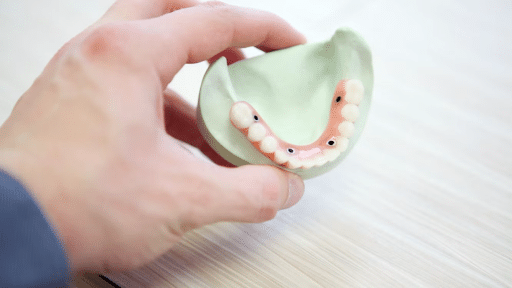
Dental Implant vs. Bridge vs. Partial Denture: Which Option Makes Sense?
Tooth loss can affect more than the appearance of your smile. It may change how you chew, alter your speech, and allow nearby teeth to shift. If you are considering dental implants in Tyler, TX, it is helpful to compare implants with bridges and partial dentures before choosing a treatment.
At Smith Dental Care, we evaluate your oral health, goals, and budget before recommending a solution. Each option can restore function and appearance, but they differ in stability, treatment process, maintenance, and long-term considerations.
Why Replacing a Tooth Matters
Replacing missing teeth can help distribute chewing forces more evenly and prevent neighboring teeth from moving into open spaces. It may also make eating and speaking more comfortable.
The right restoration depends on several factors:
- Number and location of the teeth being replaced
- Health of the gums and jawbone
- Condition of neighboring teeth
- Overall medical health
- Comfort with oral surgery
- Desired stability
- Treatment timeline
- Insurance coverage and budget
A dental exam and appropriate imaging allow us to assess these factors before discussing specific treatment options.
Comparing the Three Options
So what is the difference? Take a look at this table that breaks it down.
| Consideration | Dental Implant | Dental Bridge | Partial Denture |
| Basic design | Implant post supports a replacement tooth | Replacement tooth is supported by neighboring teeth | Removable appliance replaces one or several teeth |
| Surgery required | Usually yes | Usually no | Usually no |
| Effect on nearby teeth | Typically does not require altering them | Supporting teeth usually must be reshaped | Uses remaining teeth for support or retention |
| Stability | Fixed and highly stable | Fixed in place | Removable and may have some movement |
| Bone stimulation | Can help preserve bone around the implant | Does not replace the tooth root | Does not replace the tooth root |
| Cleaning | Requires brushing and cleaning around the implant | Requires cleaning beneath the bridge | Removed for daily cleaning |
| Treatment time | Often takes several months, depending on healing | Usually completed more quickly | Often completed without surgery |
| Initial cost | Generally higher | Usually moderate | Often the lowest initial cost |
These are broad comparisons. Treatment complexity and cost vary based on your oral health and the restoration required.
Dental Implants: Independent Support
A dental implant replaces the tooth root with a post placed in the jawbone. After the area heals, the implant supports a crown designed to look and function like a natural tooth. One major advantage is that an implant generally does not rely on neighboring teeth. It can also provide strong support for chewing and help maintain bone in the treated area.
Implants are not appropriate for everyone. Bone loss, gum disease, smoking, certain medical conditions and some medications may affect candidacy or healing. Bone grafting or other preparatory care may be recommended in some cases.
Dental Bridges: A Fixed, Nonsurgical Alternative
A traditional bridge uses crowns on the teeth beside an open space to support an artificial tooth between them. Because the restoration is cemented in place, it does not need to be removed for cleaning.
A bridge can be a practical choice when the supporting teeth already need crowns or when implant surgery is not desired. Treatment is also generally faster because there is no waiting period for an implant to integrate with the bone. The primary tradeoff is that the supporting teeth usually must be reshaped.
Partial Dentures: Flexible and Removable
A partial denture replaces one or more teeth using a removable appliance supported by the remaining teeth and oral tissues. Depending on its design, it may use clasps or other attachments to remain in position.
Because it is removable, a partial may not feel as stable as an implant or bridge. Some patients need time to adjust to speaking and eating with it. The appliance must be removed and cleaned daily, while the gums and remaining natural teeth also require careful hygiene.
Which Option Lasts the Longest?
No restoration comes with a guaranteed lifespan. Longevity depends on oral hygiene, bite forces, gum health, dental visits, appliance design, and habits such as smoking or teeth grinding.
Implants can offer long-term support when they integrate successfully and receive consistent care. Bridges can also provide many years of service, but their condition is closely tied to the health of the supporting teeth. Partial dentures may require periodic adjustment, relining, or replacement as the mouth changes.
Regardless of the option selected, regular exams allow us to monitor the restoration and the surrounding tissues.
Find the Right Tooth-Replacement Solution
There is no single restoration that works best for every smile. Choosing among a dental implant, bridge, and partial denture requires a careful evaluation of your bone, gums, neighboring teeth, and personal priorities.
If you are exploring dental implants in Tyler, TX, Smith Dental Care can help you compare all appropriate tooth-replacement options without pressure. Contact us to schedule an appointment and receive a plan designed around your health, comfort, and goals.